
Palm Springs: Still Partying Like It’s 1959

Updated: Aug 13
There are several perfectly good reasons to stop in Palm Springs.
Maybe you're road-tripping through California and need to break up that gloriously miserable ten-hour drive between Los Angeles and the Grand Canyon. Maybe you've had enough of giant cities and want sunshine, palm trees, a pool, and the radical luxury of free downtown parking. Or maybe you've simply reached the point in life where a poolside cocktail feels more important than another museum. I support all of these reasons.
Give yourself at least a night or two. Slow down. Wander downtown. Admire the houses. Drink something cold. And, most importantly, resist the temptation to over-plan. Palm Springs isn't really a city you conquer. It's a city you sit in.
Why Go? Because the Desert Has Excellent Taste.
Somehow, the city feels like you’ve accidentally driven straight into 1959. The mid-century houses are immaculate, the palm trees are everywhere, the colors are fabulous, and the whole place has this effortlessly glamorous, slightly retro energy. It’s polished without feeling stuffy, stylish without trying too hard, and just nostalgic enough to make you wonder why we ever stopped doing life this way.


Before Sinatra, There Was the Cahuilla
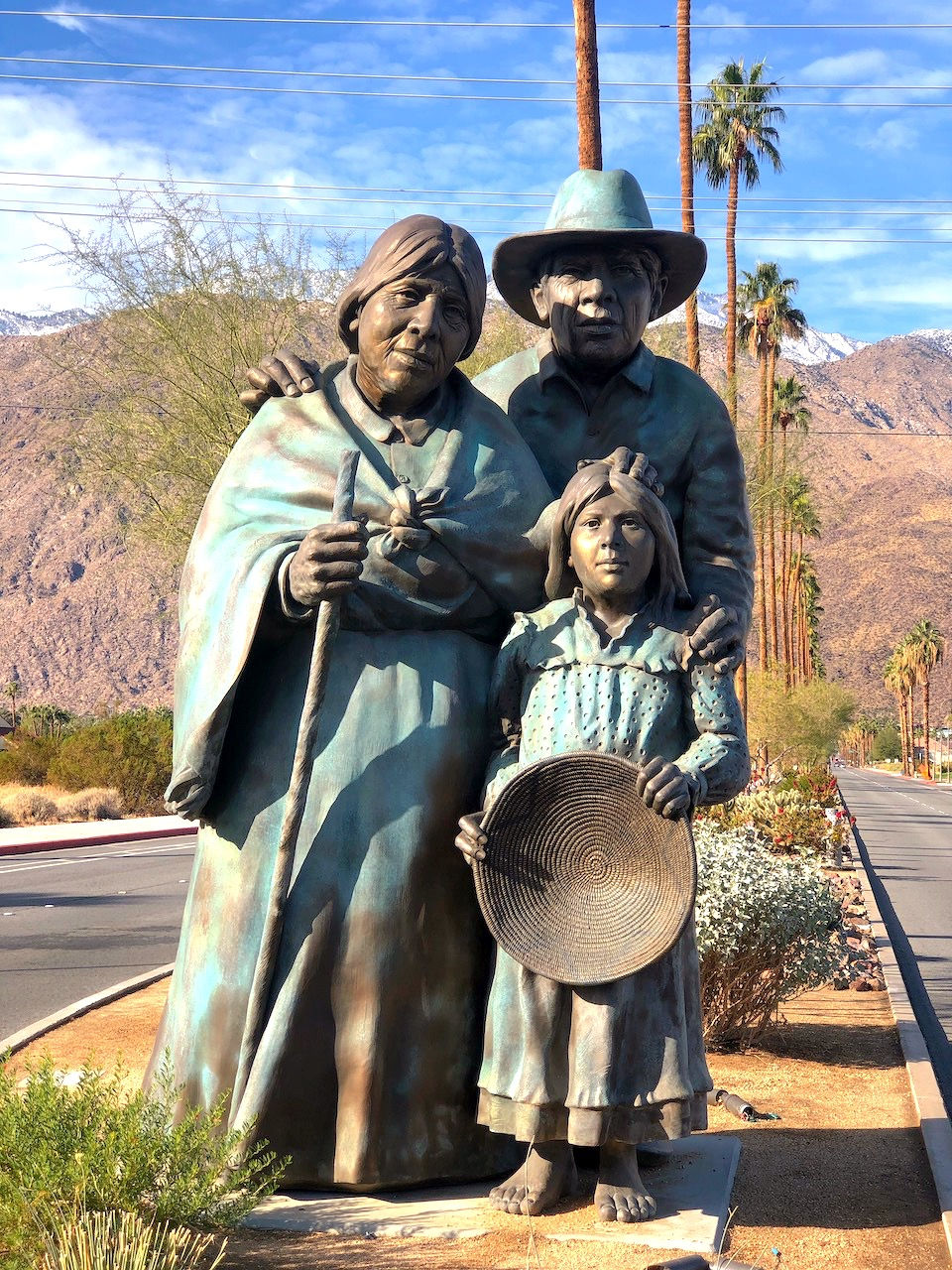
Long before Hollywood discovered Palm Springs, the Cahuilla people were already here, and they had figured out something the rest of us are still trying to master: when the desert gets brutally hot, find somewhere cooler.
The Cahuilla have lived in this region for thousands of years, and the natural hot springs were central to life here. They called the area se-khi, referring to its boiling waters. The desert wasn't empty; it was home, and the mountains, canyons and springs provided the resources and routes that made life here possible.
If you want to understand Palm Springs beyond the palm trees, cocktails, and mid-century houses, make a stop at the Agua Caliente Cultural Plaza downtown. Opened in 2023, this impressive new cultural complex sits on the site of the sacred hot mineral spring and brings the history and traditions of the Agua Caliente Band of Cahuilla Indians right into the heart of the city.
The centerpiece is the Agua Caliente Cultural Museum, where you can learn about the Cahuilla people, their relationship with the desert, their traditions, and the history of the land that eventually became Palm Springs. It’s a great reality check after spending the morning admiring 1950s houses and pretending you’ve accidentally wandered onto a movie set. This was a place with a history long before Hollywood discovered it.
And then there’s The Spa at Séc-he, built directly over the ancient hot mineral spring. The spa takes its name from the Cahuilla word associated with the boiling waters and offers visitors the chance to experience the same natural spring that has been central to the Tribe’s culture for thousands of years.
You can still experience that landscape today in places like Palm Canyon and Indian Canyons, where trails wind through palm-filled desert canyons that feel almost impossible given the scenery outside them. And yes, you can hike. I should probably mention that.
If you're visiting during the cooler months, these canyons are absolutely worth exploring. If you're here in July or August, however, I would strongly recommend admiring them from somewhere with air conditioning while drinking something cold. The desert will still be there.
Then came the Europeans, the Spanish, the Mexican period and eventually the development of the modern city. But Palm Springs really found its personality in the twentieth century when Hollywood arrived and decided the desert made an excellent weekend escape.


Hollywood Discovered the Perfect Hideaway
By the 1930s, Hollywood had a problem: movie stars needed to relax, but they weren't exactly allowed to disappear. Studio contracts often required actors to remain within roughly two hours of Los Angeles in case they were suddenly needed back on set. Which meant the celebrities couldn't exactly hop on a plane to Paris for the weekend. Enter Palm Springs.
It was close enough to Hollywood to satisfy the studios, but far enough away to feel like an escape. And then there was an even better bonus: the paparazzi weren't particularly interested in driving all the way out there. Why? Because apparently even paparazzi had a budget. At the time, photographers chasing celebrities in Los Angeles weren't exactly getting rich, and their expenses were limited. Palm Springs sat just far enough outside their usual range to make celebrity stalking considerably less attractive. So Hollywood came here instead.
Frank Sinatra, Clark Gable, Greta Garbo, John Wayne, Judy Garland and plenty of other stars turned Palm Springs into their personal desert playground. They came to escape Hollywood, party, play tennis, sit by the pool and generally do the things celebrities do when nobody is supposed to be watching.

And then there was a young Norma Jean.
Before she became Marilyn Monroe, she reportedly spent time around the Racquet Club, where Hollywood producers, actors and socialites gathered around the pool.
One famous photograph of the blonde posing poolside helped cement the image that would eventually become one of the most recognizable faces in the world.
Downtown Palm Springs: Palm Trees, Pretty Things & Plenty of Fabulous
Palm Springs may be surrounded by mountains and desert, but its real action happens downtown. The city center is small, extremely walkable, and basically designed for wandering around without any particular plan which, conveniently, is one of my favorite travel activities.
The main streets are lined with palm trees, colorful storefronts, cafés, restaurants, galleries and enough fabulous little shops to make “just looking” a completely unrealistic strategy. Even the souvenir stores seem to have better taste than most souvenir stores. Forget the usual racks of cheesy T-shirts and plastic magnets; Palm Springs leans heavily into retro design, colorful home décor, quirky gifts and all things mid-century.
A few of my favorites are Just Fabulous, Peepa’s and Destination PSP, each offering its own take on the Palm Springs aesthetic. This is the kind of shopping where you walk in looking for a postcard and walk out wondering whether you actually need a $60 cactus-shaped object for your living room.
Palm Springs has long been one of America's most welcoming LGBTQ+ destinations, and you don't have to look very hard to notice it. The city has a huge LGBTQ+ presence, from gay-owned businesses and rainbow flags to hotels, restaurants, bars and events that make it very clear that everyone is welcome and that Palm Springs has absolutely no problem being fabulous about it.
At the heart of the downtown gay scene is Arenas Road, a short stretch packed with bars, restaurants, patios and nightlife. It's less “gay district” in the traditional big-city sense and more “someone decided to put a bunch of gay bars in the desert and make sure everyone had a cocktail in their hand.” The result is relaxed, social and unmistakably Palm Springs.
Arenas is especially fun in the evening, when the daytime heat finally gives everyone permission to emerge from their air-conditioned caves. Grab a drink, find a patio, people-watch and watch the street come alive. Palm Springs has perfected the art of turning a completely ordinary evening into an event.
But you don't have to wait until sunset to enjoy downtown. During the day, Palm Springs is at its best when you simply wander. Look up at the mountains, photograph the colorful buildings, peek into the shops, admire the architecture and stop for coffee or something stronger.


Forever Marilyn: The Statue That Started a War
And then there’s Forever Marilyn, the 26-foot-tall Marilyn Monroe statue that somehow managed to turn Palm Springs into a full-blown civic battlefield.
At first, it seemed simple enough: put a giant Marilyn downtown, let tourists take approximately 14,000 photos of her skirt, and everyone goes home happy. Except... Palm Springs residents had opinions. Very strong opinions. Some thought she was fabulous, glamorous, and perfectly suited to the city's Hollywood history. Others thought a giant statue of Marilyn, particularly one permanently caught in the famous Seven Year Itch dress pose, was tacky, inappropriate, and about as subtle as a Vegas billboard.
And then things escalated. The statue arrived. Locals protested. The city debated where she should go. There were petitions, lawsuits, political arguments and enough neighborhood outrage to make you wonder whether anyone remembered there was an actual city to run. Eventually, the legal battle over the statue's placement became a full-blown saga, with Palm Springs essentially divided into two camps: Team Marilyn and Team Please-Make-Her-Go-Away.
The statue was eventually moved, and the entire episode became one of those wonderfully ridiculous Palm Springs stories where you find yourself thinking, Wait... people actually went to court over this?
But here's the thing: controversy aside, Forever Marilyn is now part of the Palm Springs experience. She's enormous, impossible to miss, and practically engineered for Instagram. You will almost certainly take a photo.


Palm Springs, Designed to Impress
Palm Springs is basically a giant outdoor architecture museum and thankfully, nobody charges admission to drive around and stare at houses. If you have even the slightest weakness for beautiful homes, clean lines, pastel colors, dramatic windows, and perfectly manicured desert landscaping, prepare to become completely distracted.
The city is famous for its mid-century modern architecture, and for good reason. During the 1950s and ’60s, architects transformed Palm Springs into a laboratory for desert living, creating homes that blurred the line between indoors and outdoors. Think geometric shapes, flat or butterfly roofs, breeze-block walls, floor-to-ceiling windows, open floor plans, swimming pools and terraces designed to make the desert part of the living room.
And the setting doesn't exactly hurt. Put a sleek white house, a turquoise pool and a few strategically placed palm trees against the San Jacinto Mountains, add 350 days of sunshine, and suddenly every driveway looks like an architectural magazine cover.
Palm Springs has one of the world's largest collections of mid-century modern residential architecture, and some of the city's most famous neighborhoods are essentially open-air galleries. You can spend hours simply driving around and admiring the houses.
The Houses Are the Main Event
The neighborhoods around Palm Springs are packed with homes designed by some of the biggest names in American modernism, including architects such as William Krisel and E. Stewart Williams. Many were built for wealthy desert residents and Hollywood celebrities, and several have become architectural icons in their own right.
What makes them so addictive to photograph is that they don't all look alike. Some are minimalist and almost futuristic; others are playful explosions of color. Some disappear behind walls and landscaping, while others proudly display their entire glass façade to the street.
And then there are the details: brightly painted doors, breeze-block screens, oversized numbers, vintage signage, unusual rooflines and landscaping that somehow makes a cactus look like a design accessory.


The Famous Door Tour
And then there are the doors. Palm Springs has elevated the front door from something you walk through into something you photograph like it's a celebrity. Bright pink, turquoise, orange, yellow and every other shade imaginable pop against the neutral desert architecture, turning an otherwise ordinary entrance into a full-blown photo opportunity.
There is now even a self-guided Colored Door Tour through neighborhoods in South Palm Springs, particularly around Kings Point and Indian Canyons, where you can hunt down some of the city's most photogenic entrances. The official route takes roughly 1½–3 hours depending on how much you stop, stare and photograph. And yes, I absolutely recommend doing it.
This is the kind of sightseeing that requires almost no physical effort just a camera, comfortable shoes and the willingness to repeatedly say, “Wait, stop! I need a picture of that door.”
One small reminder: these are people's homes, not Instagram studios. Admire from the street, don't wander onto private property, and resist the urge to ring the doorbell because you desperately need to know who chose that shade of pink.

The Other Palm Springs: Spanish Colonial Revival
For all the attention Palm Springs gets for its mid-century modern houses, there’s another architectural personality hiding in plain sight: Spanish Colonial Revival. And it couldn't be more different.
Instead of flat roofs, geometric lines, floor-to-ceiling glass and enough pastel paint to fill a box of crayons, this style brings the romance of old California: red clay tile roofs, stucco walls, rounded arches, carved wooden doors, decorative ironwork and shaded courtyards. It feels warmer, more traditional, and a little more like you’ve wandered onto a movie set somewhere in old Hollywood.
The style became particularly popular in California during the early 20th century, drawing inspiration from Spanish missions and colonial architecture. In Palm Springs, it fits the desert surprisingly well. Thick stucco walls, shaded arcades and deep-set windows make perfect sense in a place where the sun occasionally feels less like weather and more like a personal attack.
You’ll find examples throughout the city, particularly around the older neighborhoods and downtown, and they're a great reminder that Palm Springs' architectural identity didn't begin and end with the 1950s.

The Bank of America: Surprisingly Fabulous for a Bank
One of my favorite examples is the Bank of America building downtown. Yes, a bank. Stay with me. This isn't exactly the kind of building that normally makes people stop mid-shopping trip and say, “OMG, I need a picture of that.” But in Palm Springs, even the bank decided it was going to have a look.
The building combines clean mid-century lines with elements of the city's desert-modern aesthetic, creating a structure that feels distinctly Palm Springs rather than like a generic branch that could have been dropped into any American suburb. Its strong horizontal lines, open design and dramatic relationship with the surrounding palm trees make it surprisingly photogenic.

Palm Springs City Hall: Government, But Make It Modern
Then there's Palm Springs City Hall, one of the city's architectural standouts and a perfect example of how seriously Palm Springs took modern design.
Designed by Albert Frey and Robson Chambers and completed in 1957, the building is classic Palm Springs modernism: strong geometric forms, clean lines, deep shade, open space and a dramatic relationship between architecture and the desert landscape.

The most recognizable feature is the enormous circular opening in the roof above the entrance, which gives the building a wonderfully theatrical quality.
It feels less like “Welcome to City Hall” and more like “Welcome to the headquarters of a very stylish futuristic government.”
And then there are the palm trees. Their tall trunks and feathery tops soften all those hard architectural lines and create exactly the kind of composition that makes you stop, pull out your camera and completely forget that you're standing in front of a government building.
This is what makes Palm Springs so much fun for architecture lovers: the city doesn't have just one look. You can walk past a Spanish Colonial Revival house with an arched doorway and terracotta roof, turn a corner and find a razor-sharp mid-century masterpiece, then end up staring at a modernist civic building surrounded by palm trees.
The Swiss Miss Houses
Just when you think you've figured out Palm Springs architecture, the city throws you a curveball: Swiss chalets. These quirky mid-century homes were designed by architect Charles DuBois and feature dramatic A-frame roofs inspired by Swiss chalet architecture.
They're tucked into the Old Las Palmas area and look almost comically unexpected against the desert landscape. There are roughly fifteen of these distinctive homes remaining, each with its own variations on the chalet-inspired design. They're proof that Palm Springs architects weren't afraid to have a little fun. And I love them.
They're completely different from the sleek, flat-roofed modernist houses elsewhere in town, yet somehow they fit perfectly into Palm Springs's anything-goes architectural personality.


Want to Go Inside? Time Your Visit for Modernism Week
If admiring houses from the street isn't enough; and let's be honest, for architecture obsessives it probably won't be; plan your visit around Modernism Week.
The city hosts two editions each year. The big one takes place every February and runs for 11 days, while a smaller four-day edition takes place in October. Both celebrate mid-century architecture, design, art, interiors, landscape design and vintage culture, with home tours, architecture tours, talks, exhibitions and events.
The February edition is the big one, with hundreds of events and opportunities to tour homes that you normally can only admire from the sidewalk. In 2026, the February festival featured more than 400 tours, programs and events.
The October edition is smaller and more intimate, but still offers architectural tours, home tours, presentations and design events. It's a particularly good option if you want the Modernism Week experience without the full February circus.
The real prize, of course, is getting inside some of these legendary houses. Modernism Week offers guided and self-led home tours featuring work by architects such as William Krisel and E. Stewart Williams, as well as homes associated with Hollywood stars.
Tickets and home tours can be popular, so plan ahead.
And Yes, the Cacti Deserve a Mention
Of course, all this architecture would look considerably less fabulous without the landscaping.
Palm Springs has turned desert gardening into an art form. Instead of lawns and flower beds, you'll find enormous cacti, agaves, palms, succulents and sculptural desert plants arranged with the precision of a design magazine.
There are hundreds of varieties of cactus, and locals have embraced them as both landscaping and décor. Even tiny gardens can feel like miniature desert sculptures. One of the fun little stops downtown is Morteen Botanical Garden, a tiny cactus-filled garden that's perfect for a quick wander and a few photos. Because apparently in Palm Springs, even the plants have better Instagram aesthetics than I do.
And that's really the secret to Palm Springs: everything has been designed to be photographed. The houses, the doors, the pools, the mountains, the landscaping, even the cactus seems to know its good side.


From Desert Oven to Mountain Chill
Palm Springs has one particularly fabulous trick up its sleeve: you can go from baking in the desert to standing in a pine forest in the mountains in about ten minutes. No hiking required. This, obviously, got my attention.
The Palm Springs Aerial Tramway climbs dramatically up the side of Mount San Jacinto, taking you from the desert floor to the Mountain Station at more than 8,500 feet. And this isn't your average gondola ride. The tram cars rotate as they climb, giving you a constantly changing 360-degree view of the cliffs, canyon walls, and Coachella Valley disappearing below. It's basically a sightseeing attraction that forgot to stay horizontal.
And then, almost before you've had time to finish saying “OMG, look at that view,” you arrive at the top. The transformation is ridiculous. One minute you're surrounded by palm trees and desert heat; the next, you're standing among pine trees, cool mountain air, and a completely different landscape. In summer, when Palm Springs is busy trying to turn everyone into human toast, the temperature up here can be dramatically cooler. Bring a jacket. Yes, even if it's 110°F downstairs. Trust me.
Once at the Mountain Station, there are several trails through the San Jacinto wilderness, along with observation decks where you can simply admire the spectacular views without doing anything remotely athletic. There are also places to grab a bite or a drink, which is my preferred definition of mountain exploration.
The tickets aren't exactly cheap, but I thought the experience was absolutely worth it. You're not just paying for transportation up a mountain; you're getting one of the most spectacular changes of scenery in California, complete with a rotating tram ride, alpine wilderness, and panoramic views over Palm Springs and the entire Coachella Valley.
And best of all? You get all the mountain drama without having to actually climb the mountain. Finally, a hiking experience designed specifically for me.


The Palm Springs Lifestyle: Eat, Drink, Repeat
Palm Springs has perfected the art of making absolutely nothing feel like an activity. Breakfast becomes brunch. Brunch becomes cocktails. Cocktails become pool time. Pool time becomes “maybe we should get another cocktail.” Suddenly it's 6 p.m. and you've accomplished absolutely nothing, but somehow you're exhausted.
When Palm Springs Gets Loud
For a place that spends most of its time looking like it’s lounging beside a pool in oversized sunglasses, Palm Springs has a surprisingly busy social calendar. Throughout the year, the desert fills up with architecture obsessives, tennis fans, festival people, drag queens, music lovers, design nerds, and approximately every gay man within a 300-mile radius. Some events are sophisticated. Some are enormous. Some involve questionable amounts of glitter. All of them are a good excuse to visit the desert.
BNP Paribas Open (March)
For: Tennis fans, celebrity spotters and people who enjoy watching extremely fit people chase a yellow ball in the sunshine.
Held in nearby Indian Wells, this is one of the biggest tennis events in the world and turns the entire Coachella Valley into tennis central for a couple of weeks.
My verdict: Even if you're not obsessed with tennis, the combination of desert sunshine, big-name players and serious people-watching makes this a pretty excellent excuse to spend a day in Indian Wells.
Coachella (March/April)
For: Music lovers, festival fashion enthusiasts and people willing to spend an alarming amount of money to stand in a desert wearing an outfit that makes absolutely no sense for a desert.
The Coachella Valley Music and Arts Festival takes over nearby Indio for two weekends every April, bringing major artists, enormous crowds, art installations and an almost supernatural quantity of cowboy boots.
My verdict: You don't have to attend Coachella to feel it. During festival weekends, you'll know it's happening.
Stagecoach (April)
For: Country-music fans, cowboy-boot enthusiasts and anyone who thinks Coachella would be better with more denim.
Stagecoach follows Coachella in Indio and brings a completely different crowd to the desert. Think country music, giant hats, boots, beer and enough fringe to upholster a small hotel.
My verdict: Same desert. Very different playlist.
Desert X (Spring)
For: Art lovers, Instagram hunters and people who enjoy asking, But is this actually art? before taking 47 photos of it.
Desert X transforms the Coachella Valley landscape into an enormous outdoor gallery, with contemporary artworks installed throughout the desert. The fun is partly the art itself and partly the hunt for it.
My verdict: Art + desert + giant mysterious objects = excellent excuse to get in the car and explore.
Splash House (Summer)
For: People who believe a hotel pool should double as a nightclub.
Splash House turns Palm Springs hotels into giant pool parties, with DJs performing across multiple properties and crowds bouncing between venues by shuttle. It's basically Coachella's pool-loving younger cousin who has decided that shoes are optional.
My verdict: If your idea of cultural enrichment involves a DJ, a pool and a cocktail, this is your museum.
Dinah (Fall)
For: Women, LGBTQ+ travelers and anyone looking for a weekend where the desert becomes one giant party.
The Dinah is one of Palm Springs' best-known LGBTQ+ events for women, bringing music, pool parties, DJs and a huge social scene to the city.
My verdict: Palm Springs doesn't just have a gay scene. It occasionally has an entire gay season.
Greater Palm Springs Pride (November)
For: Pretty much everyone who enjoys a parade, a party and an excuse to wear something fabulous.
Palm Springs Pride takes place in November, when the rest of the country is starting to think about coats and Thanksgiving while Palm Springs is still perfectly happy with sunshine, shorts and poolside drinks.
My verdict: Probably one of the few places where you can celebrate Pride without checking the weather app first.
Palm Springs International Film Festival (January)
For: Movie lovers, film buffs and people who like their celebrity sightings with a little more red carpet.
The year kicks off with the Palm Springs International Film Festival, bringing films, filmmakers and plenty of Hollywood energy to the desert.
My verdict: A glamorous way to start the year and considerably warmer than Sundance.


Most days, Palm Springs is perfectly happy to hand you a cocktail and tell you to slow down.
But every once in a while, it turns up the music, puts on something fabulous and reminds you that the desert knows how to party.
Trip Debrief
👍🏼 Worth The Detour
The gloriously frozen-in-time 1950s vibe. Palm Springs is basically a vintage postcard that never got the memo about modern times and frankly, I hope it never does. The mid-century architecture, pastel-colored doors, palm trees everywhere, and that general feeling that you've somehow wandered onto a movie set from 1959 make the whole place ridiculously charming. Add a small, super-chill downtown and sunshine that seems to have signed a permanent lease, and you've got a pretty irresistible little desert escape. You genuinely start to forget what clouds look like.
⏱️ Time To Do It Right
Two or three sunny, pool-drenched days; just enough time to relax, explore, admire approximately 700 mid-century houses, drink something cold, and seriously consider early retirement in Palm Springs. There's enough to keep you entertained without turning the trip into an exhausting sightseeing marathon, which is exactly the point.
🪫 How Tired Was I, Really?
The energy level for fhis adventure was 0.0001% (mostly required for lifting the cocktail glass). If you're looking for a trip that won't challenge your muscles, your patience, or your will to live, Palm Springs is IT. The energy required here is virtually nonexistent. Picture this: a light stroll downtown for the 'gram, followed by a vital hydration break (aka cocktail). Maybe a short walk through a canyon but only if you're emotionally prepared. Then, yes, you guessed it... another cocktail. A little shopping because obviously you need that cactus keychain, followed by some absolutely essential recovery time by the pool where you'll decide what to wear for dinner. Then it's dinner, some star-gazing, and a final nightcap because apparently we haven't relaxed enough yet. Honestly, I burned more calories writing this paragraph than I did during the entire trip.


